
Four bronze rhinoceros beetles
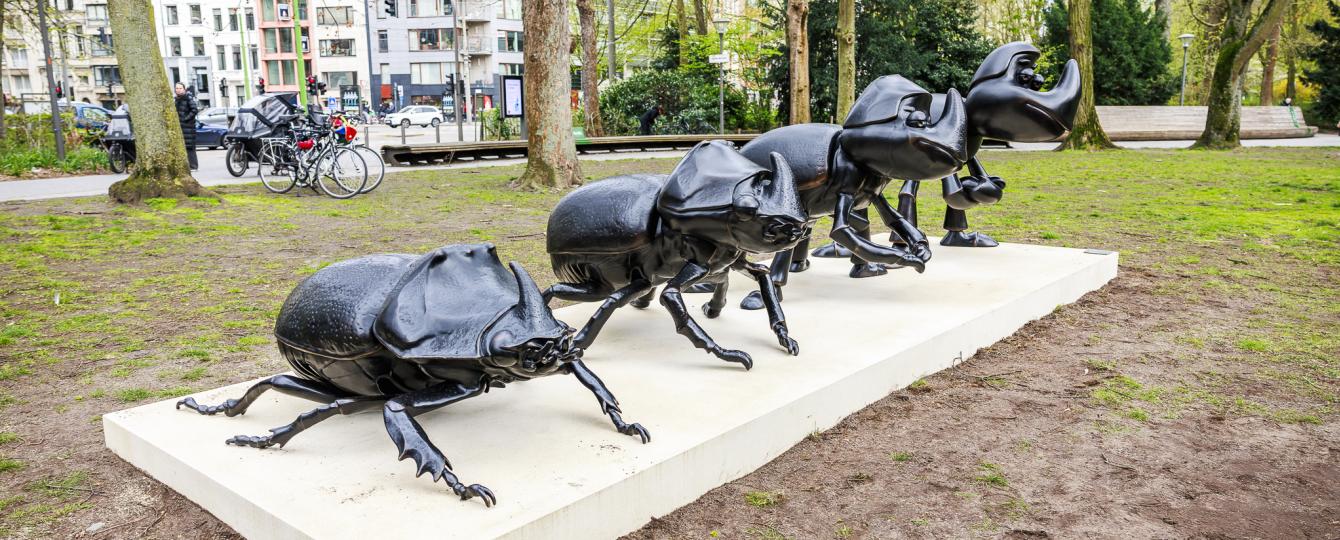
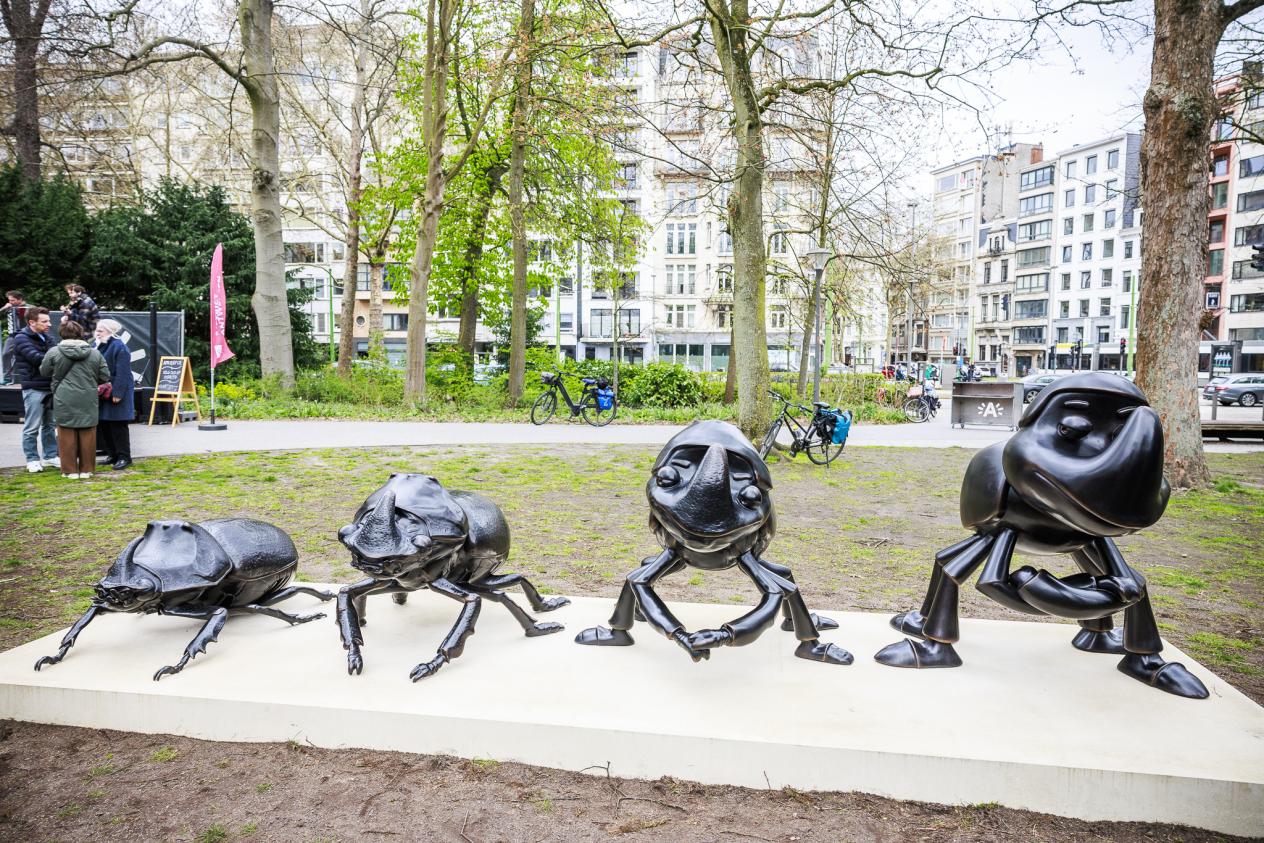
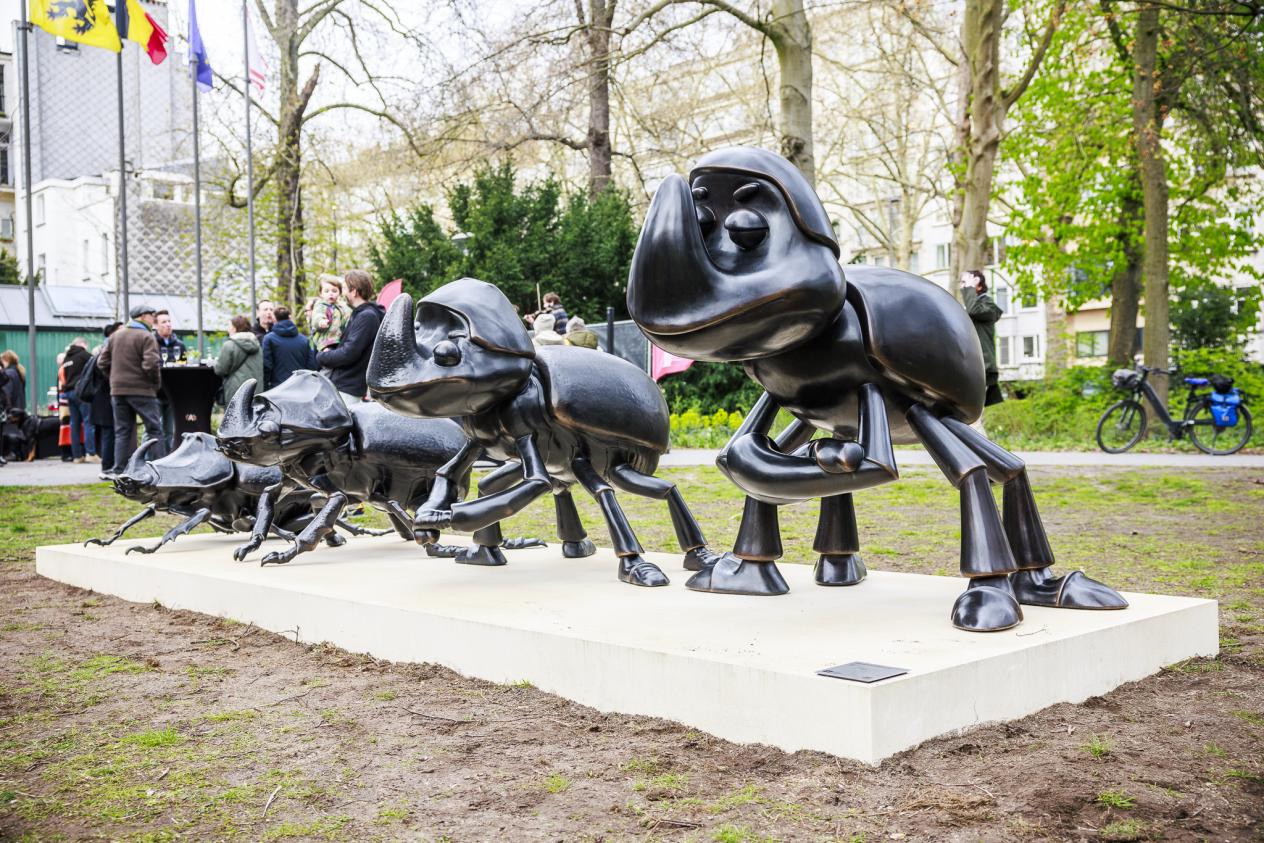
Four bronze rhinoceros beetles stand side by side. Each sculpture depicts the same animal, but in a different stage of transformation. On one side, a lifelike beetle with every detail perfectly rendered. On the other, a cartoon version, standing upright, arms crossed, casting a mischievous glance. The two in-between sculptures show hybrid moments in the transition from a natural to an anthropomorphised state.
Artist Oliver Laric (born 1981, Austria) is fascinated by the relationship between human and non-human animals. The new sculpture group in Harmonie Park, commissioned by the Antwerp district and Kunst in de Stad – Middelheim Museum, expresses the fluid, ever-changing relation between culture and nature. The European rhinoceros beetle Laric depicts here undergoes a gradual metamorphosis: from left to right, the beetle gradually develops human traits, while in the other direction, it returns to its natural biological form. Through this dynamic, highlighting the similarities and differences between each sculpture, the artist stimulates curiosity and attentive observation. By explicitly showcasing the hybrid "in-between phases," Laric opens up space for complex identities.
Inspired by the 16th century and today
The artwork draws on various sources of inspiration, such as comics and animation, deeply entangled with Belgian visual culture. In many of these comics, the insect world serves as the backdrop for stories about human emotions and concerns. Another reference is the Antwerp humanist Joris Hoefnagel, who made groundbreaking drawings of the insect world in the late 16th century, including a rhinoceros beetle. Hoefnagel's oeuvre is considered one of the very first artistic and scientific studies of insects, which were long considered an inferior or irrelevant subject of research.
In an urban park like Harmonie Park, the unique relationship between culture and nature is tangible. It is an important green haven amidst the bustling city, but is also a carefully managed heritage site. The harmony evoked in the name refers to the musical history of this place. Oliver Laric's work may contribute to a more symbolic understanding of this place, where people and animals of all shapes and sizes live together, in harmony.
 ©️ Victoriano Moreno
 ©️ Victoriano Moreno